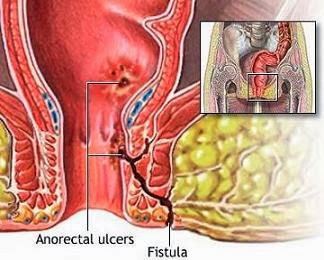
Anal Fistula
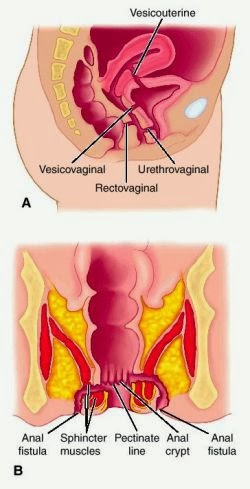
- Enterocutaneous: This type of fistula is from the intestine to the skin. An enterocutaneous fistula may be a complication of surgery. It can be described as a passageway that progresses from the intestine to the surgery site and then to the skin.
- Enteroenteric or Enterocolic: This is a fistula that involves the large or small intestine.
- Enterovaginal: This is a fistula that goes to the vagina.
- Enterovesicular: This type of fistula goes to the bladder. These fistulas may result in frequent urinary tract infections, or the passage of gas from the urethra during urination.
- Intersphincteric fistula. The tract begins in the space between the internal and external sphincter muscles and opens very close to the anal opening.
- Transphincteric fistula. The tract begins in the space between the internal and external sphincter muscles or in the space behind the anus. It then crosses the external sphincter and opens an inch or two outside the anal opening. These can wrap around the body in a U shape, with external openings on both sides of the anus (called a horseshoe fistula).
- Suprasphincteric fistula. The tract begins in the space between the internal and external sphincter muscles and turns upward to a point above the puborectal muscle, crosses this muscle, then extends downward between the puborectal and levator ani muscle and opens an inch or two outside the anus.
- Extrasphincteric fistula. The tract begins at the rectum or sigmoid colon and extends downward, passes through the levator ani muscle and opens around the anus. These fistulas are usually caused by an appendiceal abscess, diverticular abscess or Crohn’s disease.
The dentate line is the borderline between the anus and the rectum, and it is very painful when bacteria enters from the area it caves inward, suppurates and produces abscess (accumulated pus). It is called anal fistula when the accumulated pus spreads around, breaks the skin and discharges pus, the hole the breaking made does not close up, and forms a pipe linked to the inside of the anus.
.jpg "anal fistula homeo treatment in chennai")
- Mild pain around the anus, centred in an area where an old anal abscess has either drained spontaneously, or has been opened surgically by a doctor
- Persistent drainage of blood, pus or foul-smelling mucus from the anal area.
- Symptoms of a recurrent anal abscess, which may develop if the external opening of the fistula becomes
clogged and the old abscess reactivates.
Vivekanantha Clinic Doctors treats many cases of Anal FIstula with successful results. Many patients get relief after taking treatment from Vivekanantha Clinic. You can meet the Doctors at Vivekanantha Homeopathy Clinic, Velachery, Chennai 42. To get appointment please call 9786901830, +91 94430 54168 or mail to consult.ur.dr@gmail.com,
at
==–==
anal fistula homeopathy treatment in chennai, fistula specialist doctor in chennai, fistula clinic in chennai, best fistula treatment in chennai, fistula treatment without surgery in chennai, anal abscess treatment in chennai, pus in anus treatment in chennai, pistula treatment in chennai, fishtula treatment clinic chennai, bisdula treatment in chennai, bishtula treatment in chennai, fistula treatment in tamil, fistula details in tamil, பிஸ்டுலா விளக்கம் தமிழில், பிஷ்டுலா சிகிச்சை, ஆசனவாயில் கட்டி, சூட்டு கட்டி, மூலக்கட்டி சிகிச்சை, மூல சூடு சிகிச்சை, மூல குரு சிகிச்சை, ஆனல் பிஸ்டுலா சிகிச்சை சென்னை,